Tourism
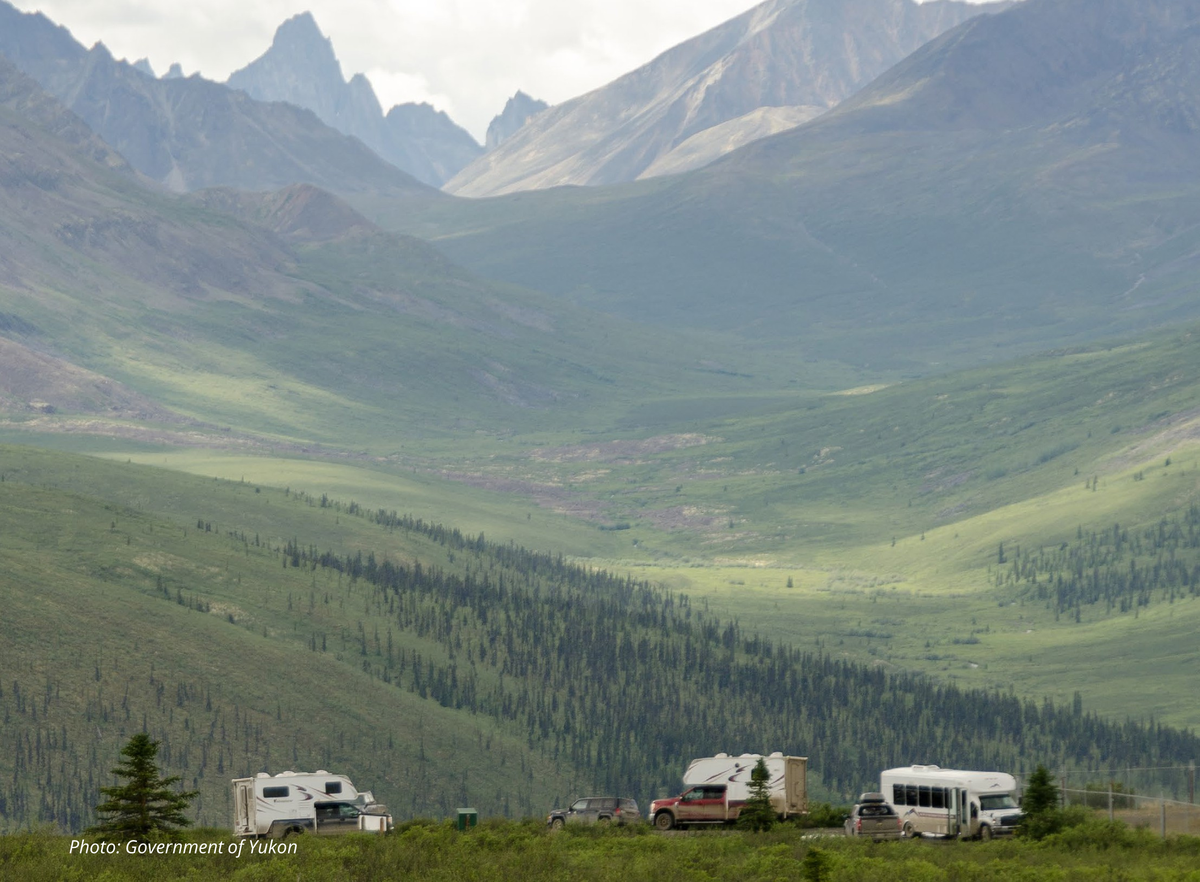
Tourism offers an important path to sustainable economic activities in the Region and is a significant contributor to the regional and territorial economies. Regional tourism has mainly been based on the legacy of the gold rush, though there has been a recent shift toward wilderness tourism and cultural attractions. Tombstone Territorial Park offers significant opportunities for guided and unguided tourism, which is growing. Management of the park itself is excluded from the scope of this Plan; however, the park’s influence extends beyond its borders.
Other important areas for tourism in the Region include the Top of the World Highway, the Klondike Valley, and the Yukon, Klondike, and Fortymile rivers. Given limited access and the desired future state of certain LMUs, promoting backcountry tourism experiences may not be suitable in all areas of the Region – for example, LMU 1: Tthetäwndëk (Tatonduk). The recent designation of the Tr’ondëk–Klondike UNESCO World Heritage Site will likely be a new tourism draw.
While tourism can promote stewardship and cross-cultural connection, tourism traffic can adversely impact ecological and cultural values, including wildlife, fish and their habitats, and it can lead to conflicts with other land users. High levels of tourism can also decrease the quality of a tourism experiences, especially when they focus on wilderness or wildlife. Impacts to the visual integrity of river and highway viewscapes, as well as high levels of overhead air traffic, affect the quality of tourism and wilderness travel.
Continued, carefully managed, and sustainable growth of the tourism industry is desirable to contribute to a Sustainable Local Economy. There is particular potential for growth in wilderness and ecotourism, culture and heritage tourism, and arts-based tourism. Directions for all values and economic activities should be read alongside the Stewardship Directions for Tourism, because of the interconnections between values and activities.
Key Planning Issues
- The sector is vulnerable to economic shocks, as seen during the COVID-19 pandemic.
- Development activities that impact wilderness, wildlife, and wildlife habitat, water quality, aesthetics, and heritage sites also impact tourism values.
- High levels of overhead air traffic, noise, dust, and industrial activity diminish the wilderness experience of backcountry visitors and river travelers.
- Tourism is not always compatible with other economic or socio-cultural activities.
- Tourism can have negative impacts on values such as wildlife, habitat, cultural use, and harvest, depending on volume, location, timing, and mode of access.
Stewardship Directions
- Carry out tourism activities in a manner consistent with the principles of stewardship and sustainable development.
- Land users engaged in activities that could impact tourism should consider how their activities may affect tourism values.
- When engaging in tourism activities (as a tourist or operator), promote and follow ethical and respectful practices such as leave-no-trace principles.
- Respect the vision of the Plan and respect culturally or ecologically sensitive areas by not promoting or encouraging tourism in these places.
- Consider and respect LMU visions and consider current and future access when promoting backcountry tourism experiences. Backcountry tourism experiences will not be suitable in all areas of the Region.
- When engaging in tourism activities, as a tourist or operator, use existing access and minimize impacts on the land.
- When operating tourism activities, promote stewardship.
- When operating tourism activities, share the history and heritage of the Tr’ondëk Hwëch’in as extensively as the history of the Klondike Gold Rush.
- Where possible and appropriate, include Hän language in signage and promotion.
Implementation Actions
- Incorporate Hän language and Tr’ondëk Hwëch’in cultural history and contemporary use into tourism management strategies and signage in the Region.
- Develop clear management guidelines for commercial wilderness tourism and commercial wildlife viewing in areas of high visitation such as the Dempster Highway, the Top of the World Highway, and the Yukon River Corridor.
- Develop and publish best management practices for tourism industries, including wilderness tourism.
- Consider the feasibility of tourism operators helping to monitor climate change.
Governance Recommendations
- Implement the Yukon Tourism Development Strategy, specifically Goal #2.
- Provide educational information to aircraft users (for example, local companies that operate aircraft, tourism operators, mineral exploration companies) about areas of concern. Encourage them to avoid Wildlife Key Areas and heritage resource areas wherever possible.
- Promote low-emission tourism opportunities (such as biking, walking).
- Promote Indigenous-led tourism.
- Develop tools to promote stewardship and protect values by regulating the amount of tourism and tourism impacts in the Region. Prioritize locally based operators who can demonstrate local buy-in and responsible use.